


Dull and surprisingly dumbed down.
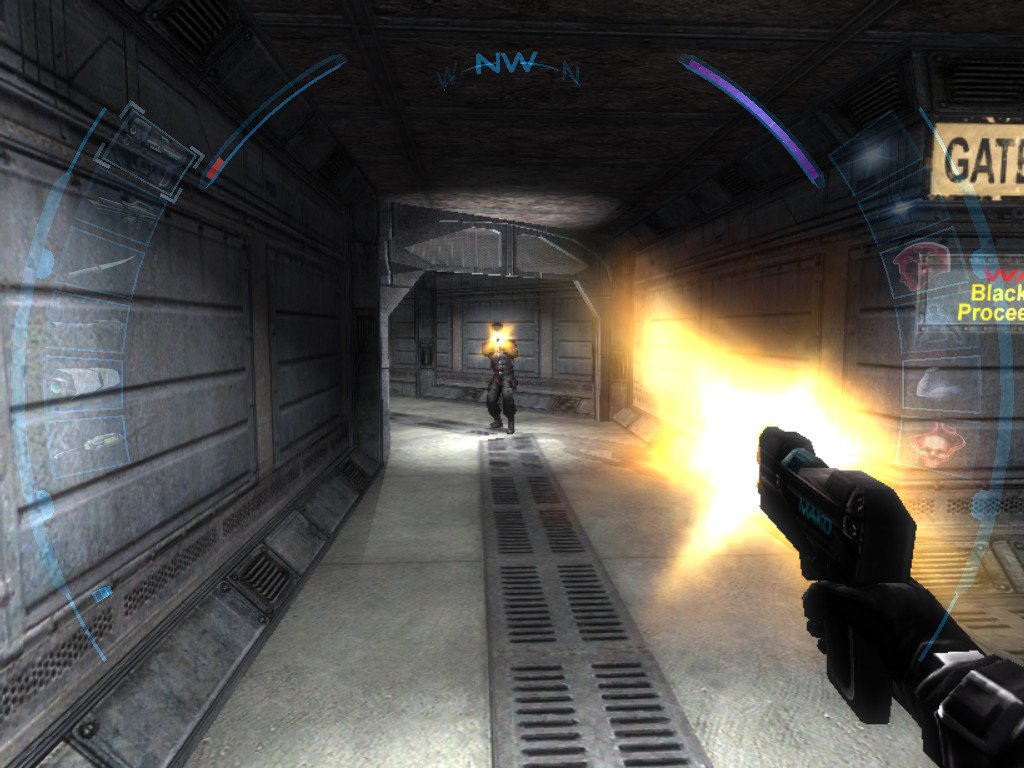
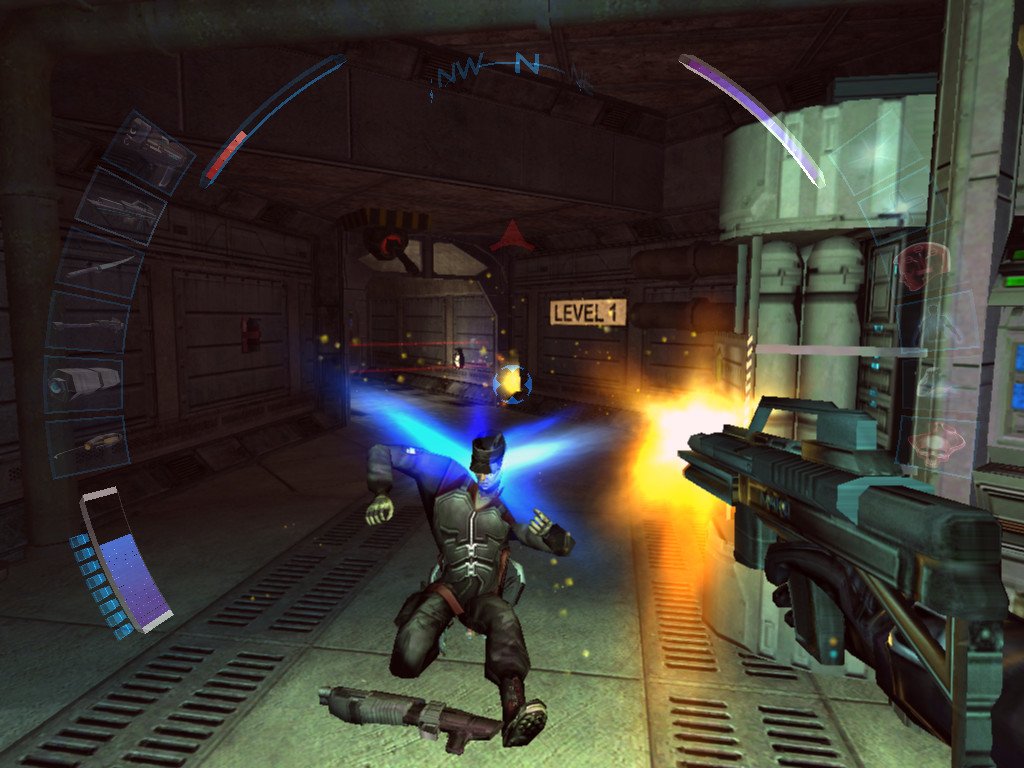
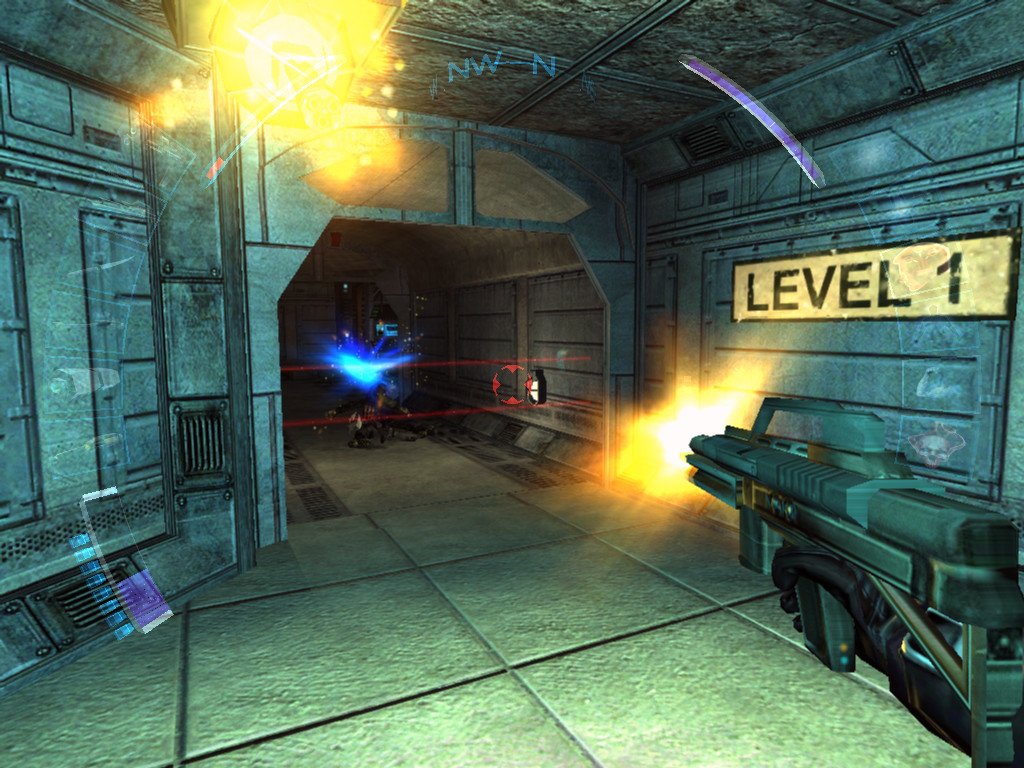
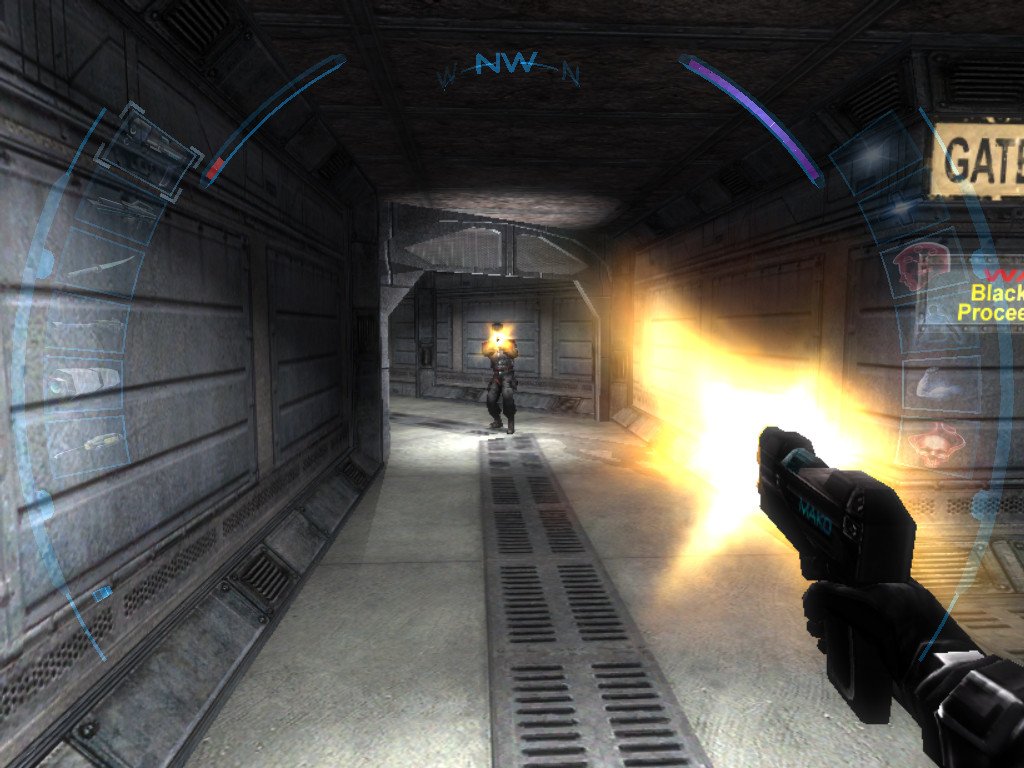
Shooting it out cowboy style in Deus Ex 2.
The console mindset is everywhere in Deus Ex: Invisible War, the long-anticipated sequel to 2000’s masterpiece Deus Ex. This regression was based around a particular conceit: the idea that console and PC gamers are fundamentally identical. By itself, there’s probably some truth there. What it fails to acknowledge is that fans of the series had already played and lauded the original Deus Ex and that people were not daunted by, but had in fact embraced, its inherent complexity, especially given its themes: international conspiracies, a hard cyberpunk premise, and a strong emergent narrative.
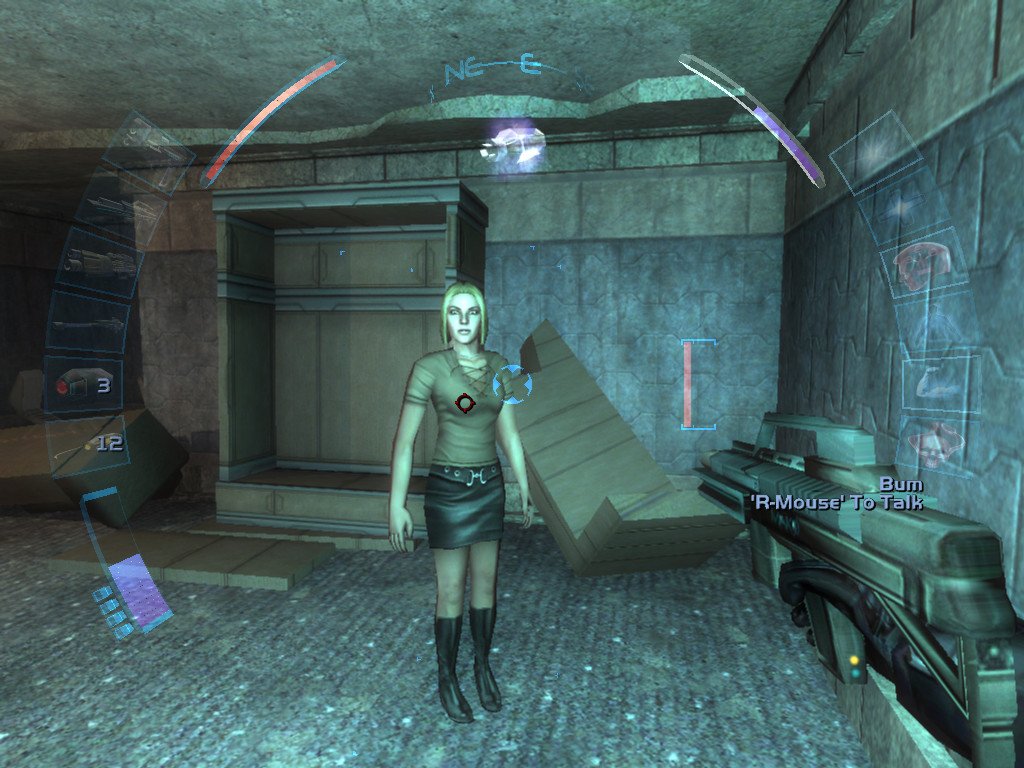
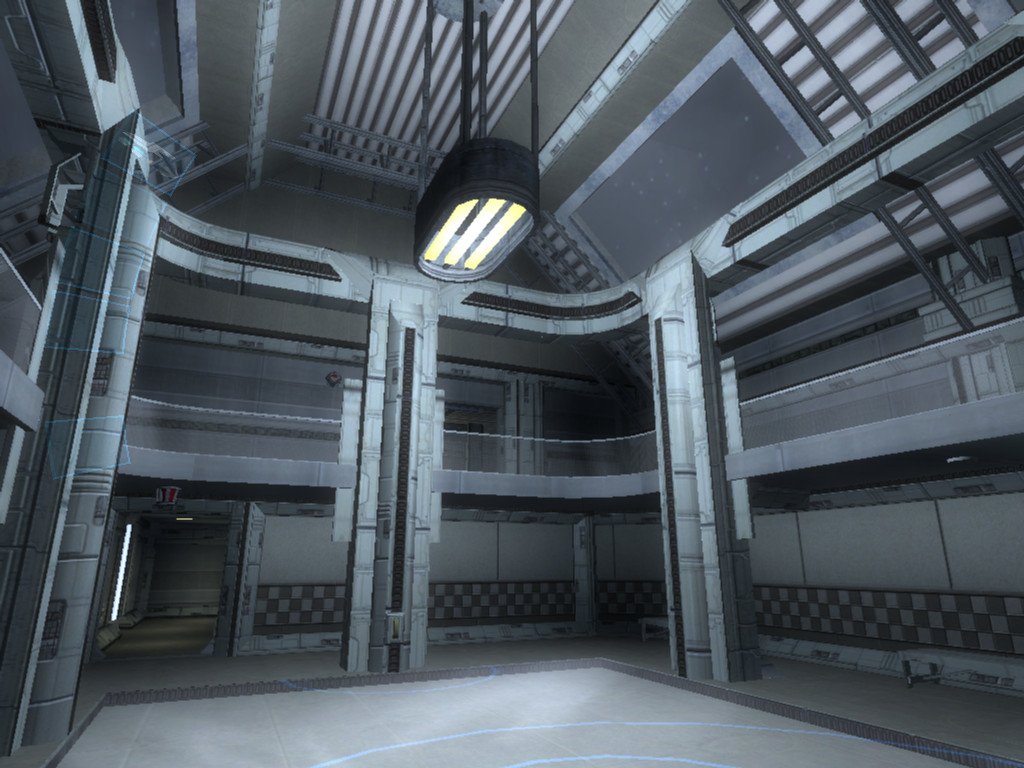
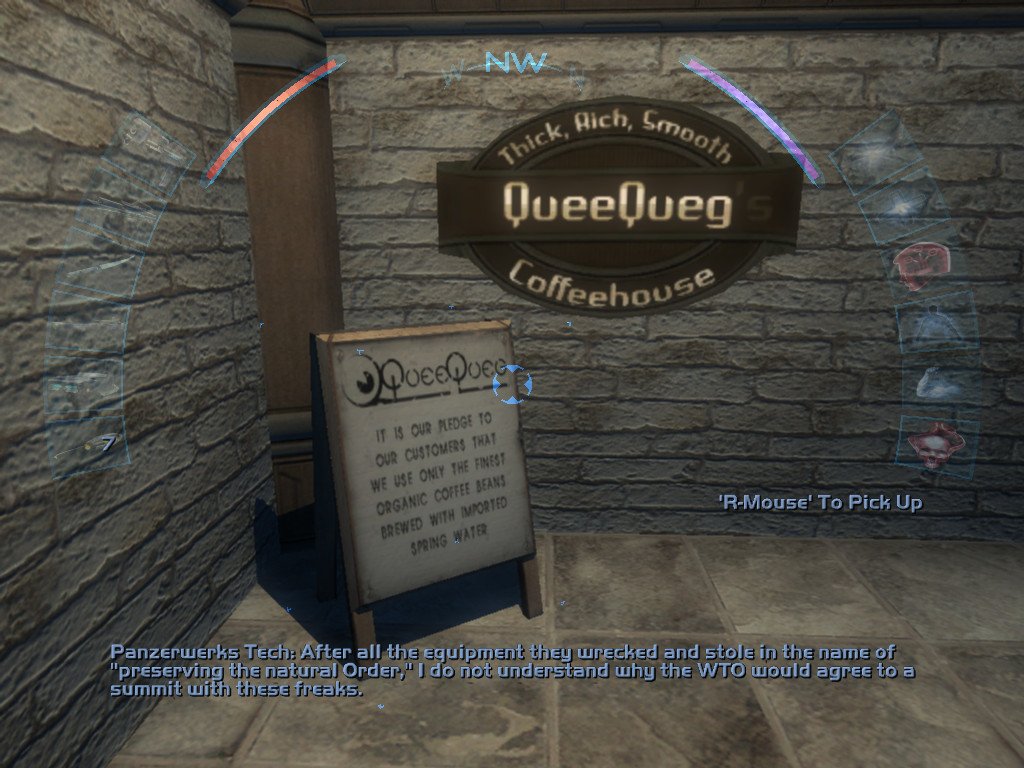
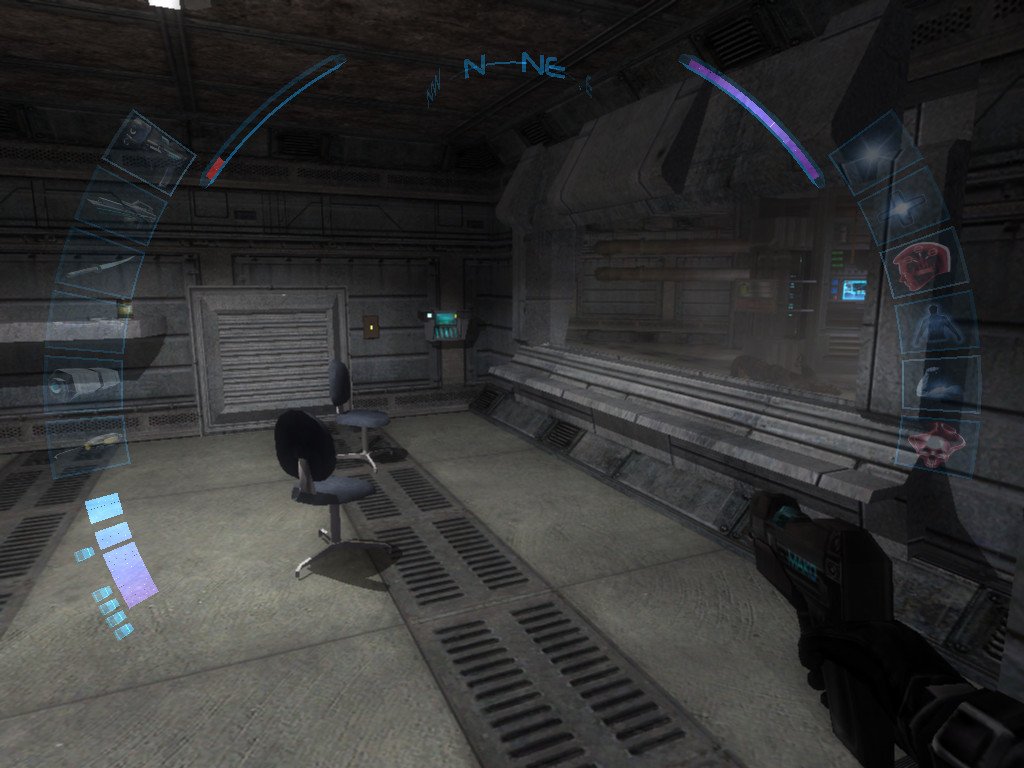
Invisible War, on the other hand, was designed with console gamers in mind first and foremost. Due to the memory limitations of the Xbox, sprawling city levels are now reduced to street corners, and massive multi-level superstructures become collections of cubicle-sized rooms. Level loads are frequent and lengthy. Warren Spector, the studio director of ION Storm and figurehead for the series, has claimed that they’ve been able to focus on greater detail within these confined areas and create a more “intimate†experience. What he neglected to mention was that the price for such intimacy is any sense of epic scale, which is an experiential metaphor whose absence sorely hurts a game with a plot and theme that supposedly spans the globe.
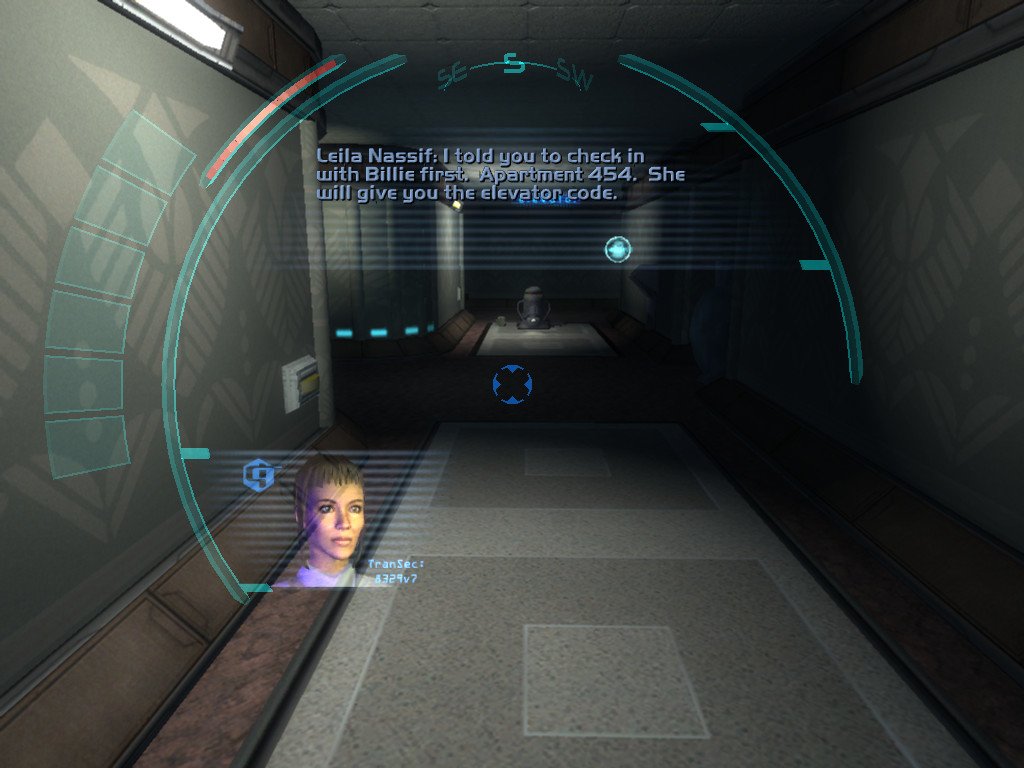
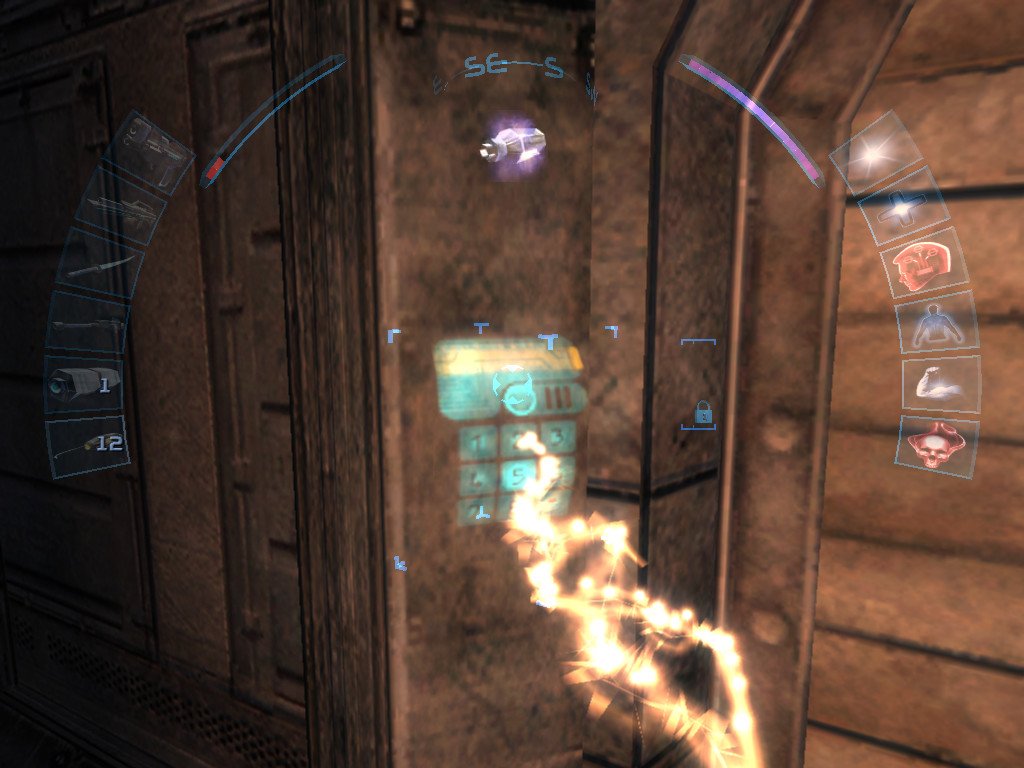
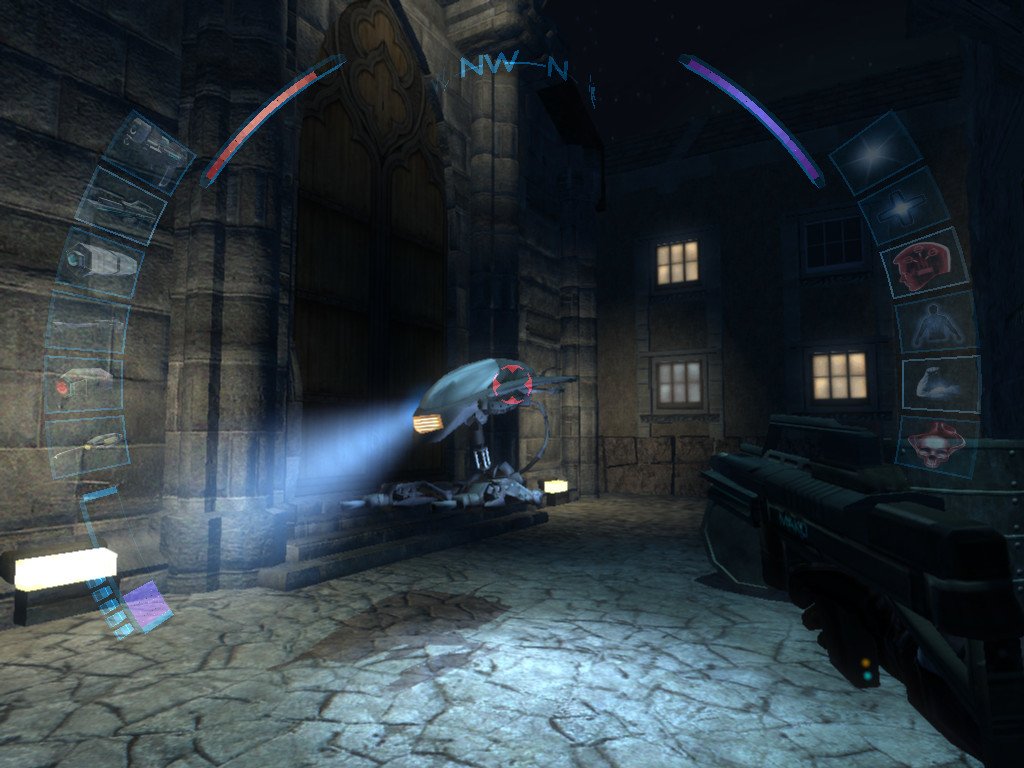
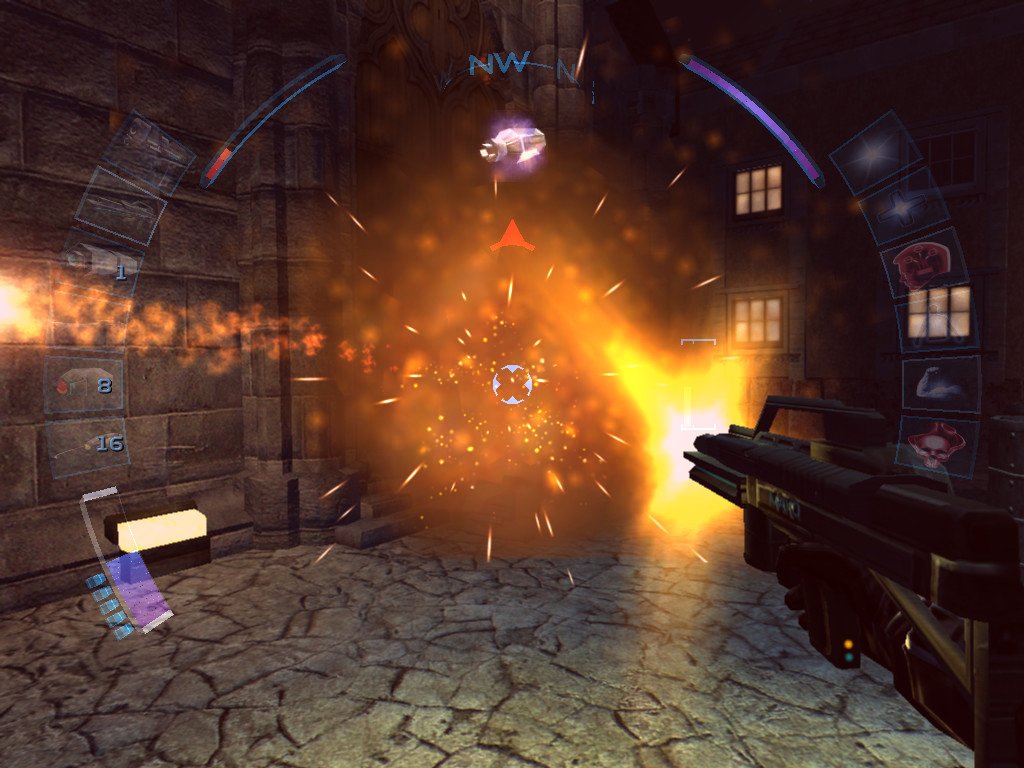
That said, the “intimacy†angle does work well, despite the limited real estate. The detailed architecture and newfangled lighting model produce some gorgeous visuals, and almost every single one of the missions has multiple clear solutions. A little quick searching always turns up a nearby terminal to hack, a bot to commandeer, or a ventilation shaft to sneak around in. Like the previous title, the necessary equipment for completing a level is always available and smartly placed, even if it’s a bit nonsensical within the context of the story.
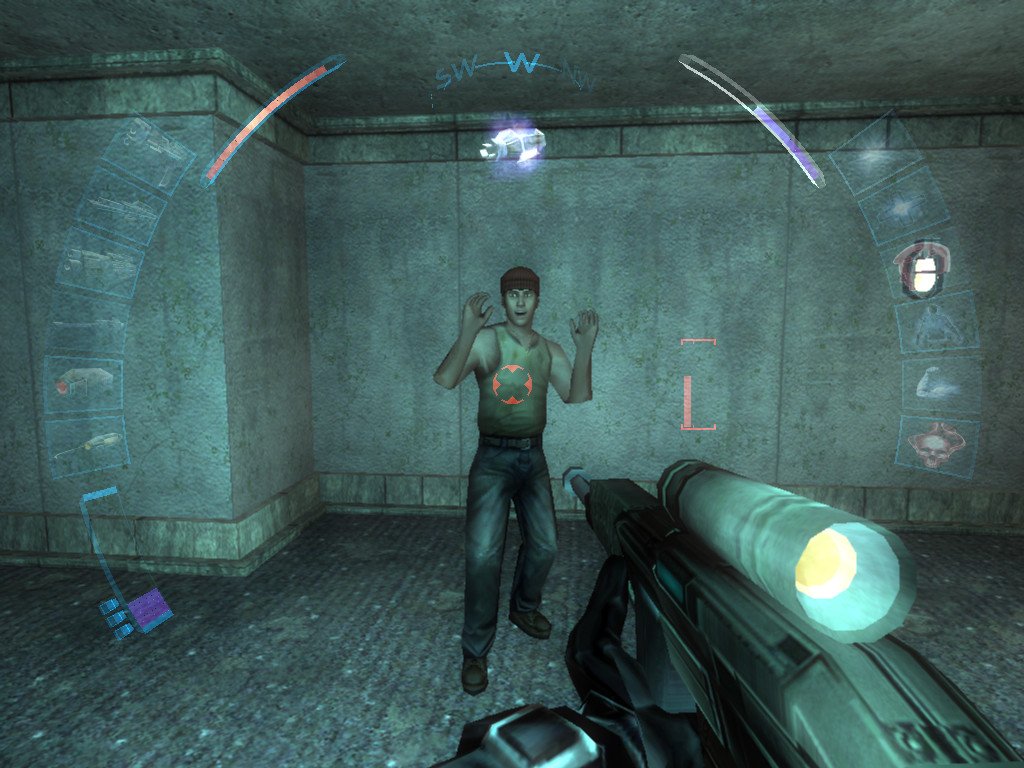
Unfortunately, the AI doesn’t take advantage of the simplified level design. It’s dumb and unpredictable, which often makes the stealth approach a trial of save-and-reload. Triggering an alarm often brings guards straight to you. The choice to use a unified ammunition model for the firearms is certainly a point of controversy among the more simulation-minded types, but it’s actually an original approach that works very well in Invisible War. Again, the small levels mean there aren’t going to be any Serious Sam-level sorties going on, and a significant portion of the missions can be resolved without any gunplay at all. The same is true for location-based damage—its almost complete absence in this sequel is largely forgivable, since the gameplay isn’t centered on you being a soldier.
-

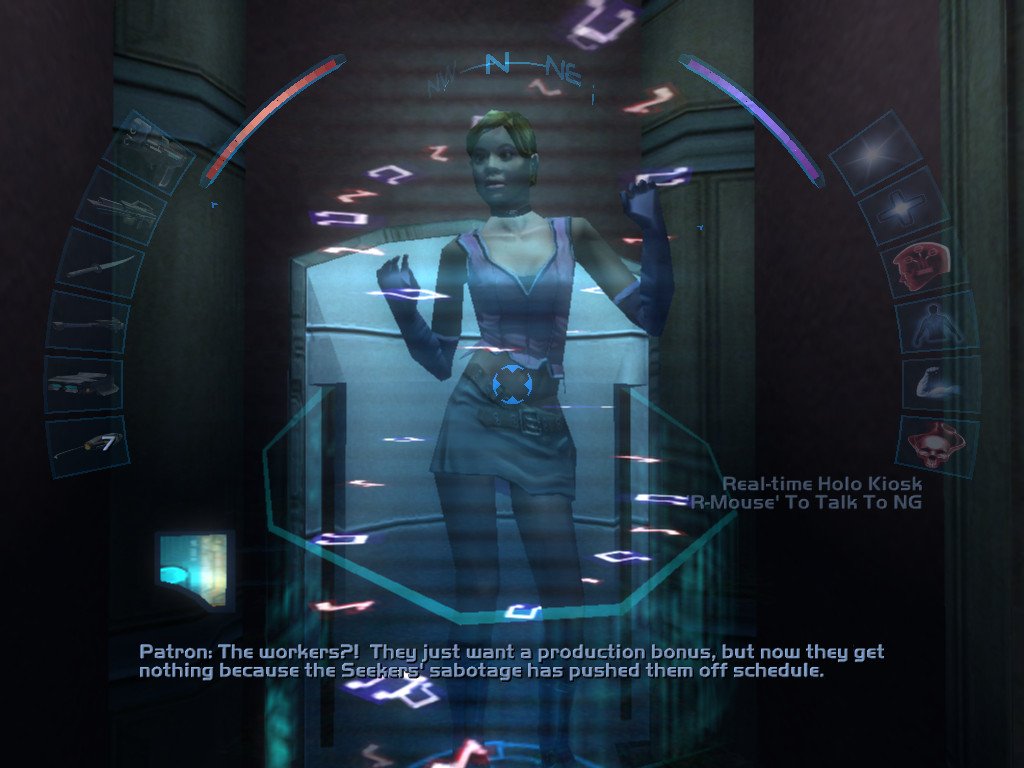
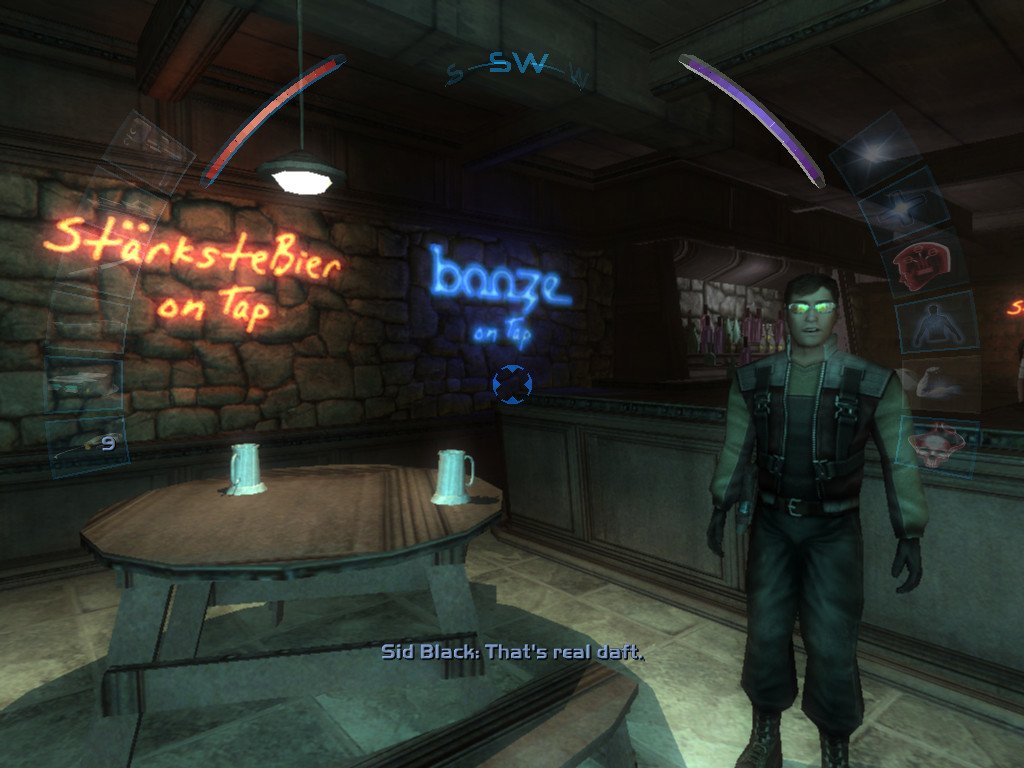
- You can always watch entertainment at the bar.

-

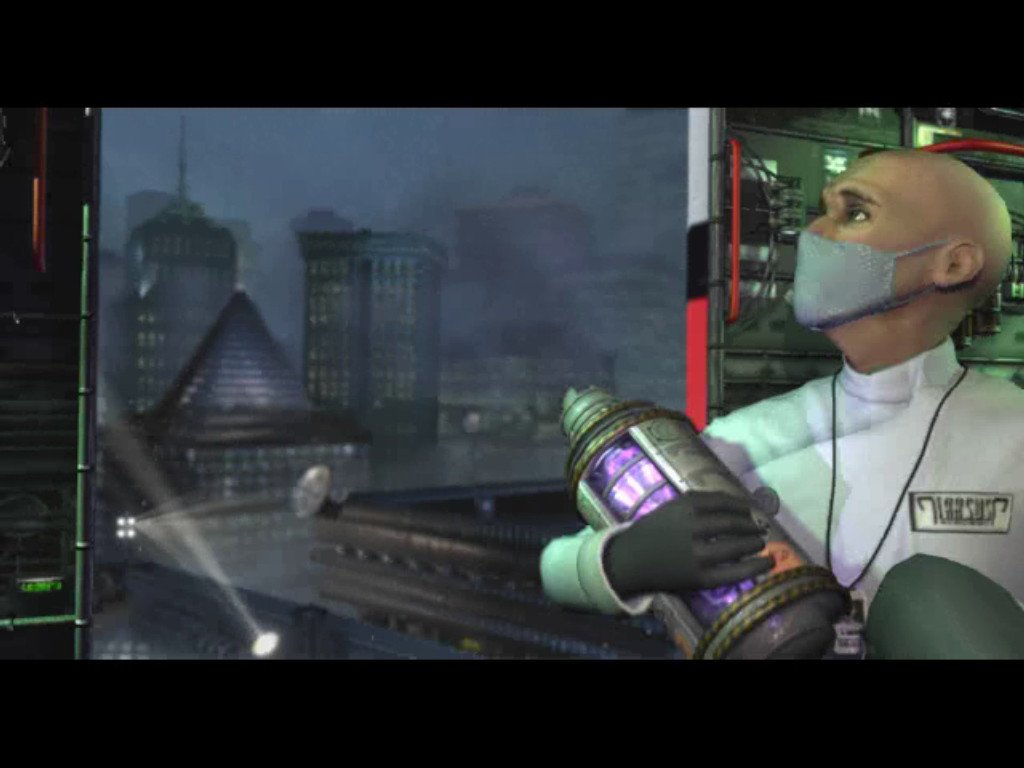
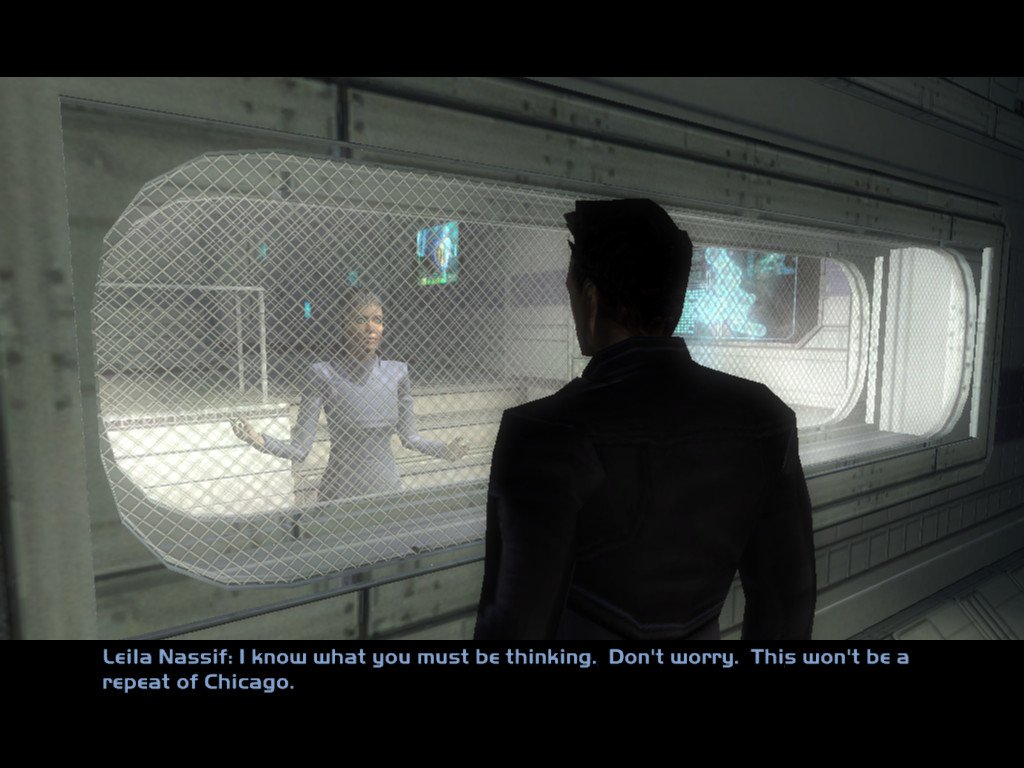
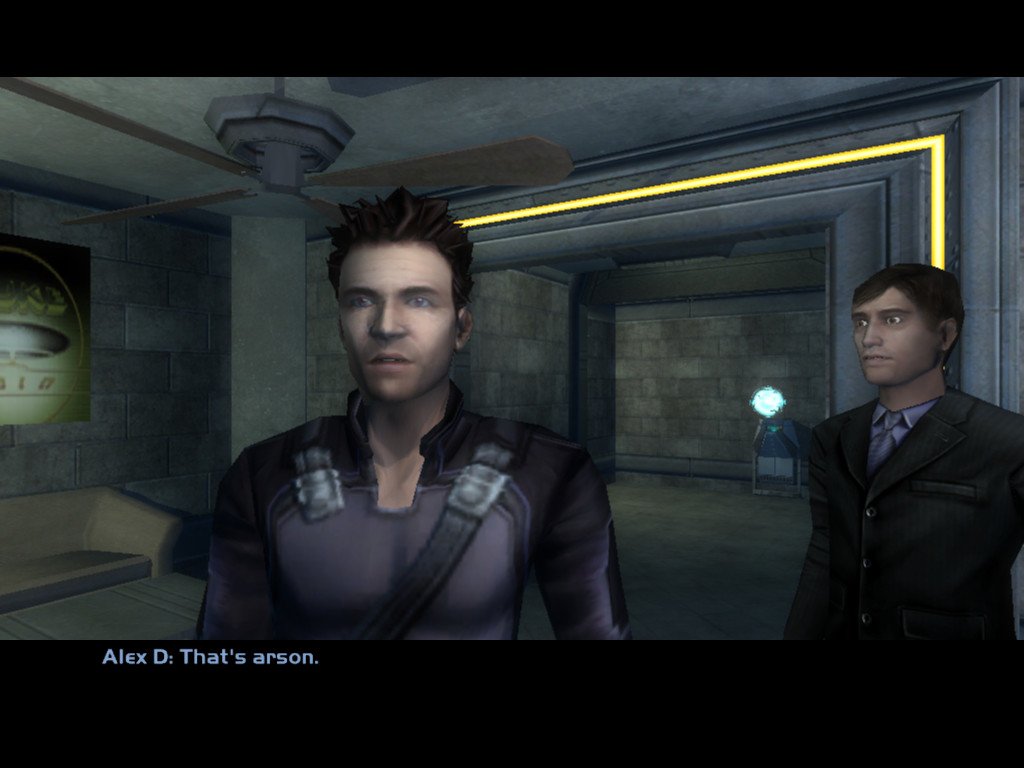
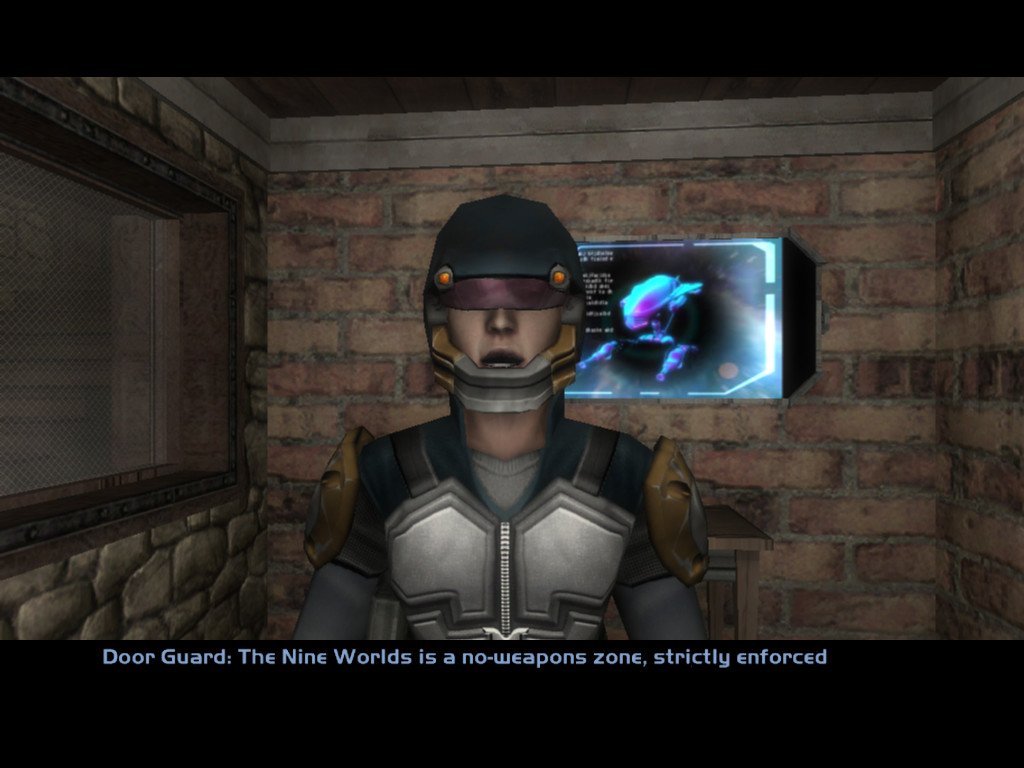
- Cool cutscene.

-

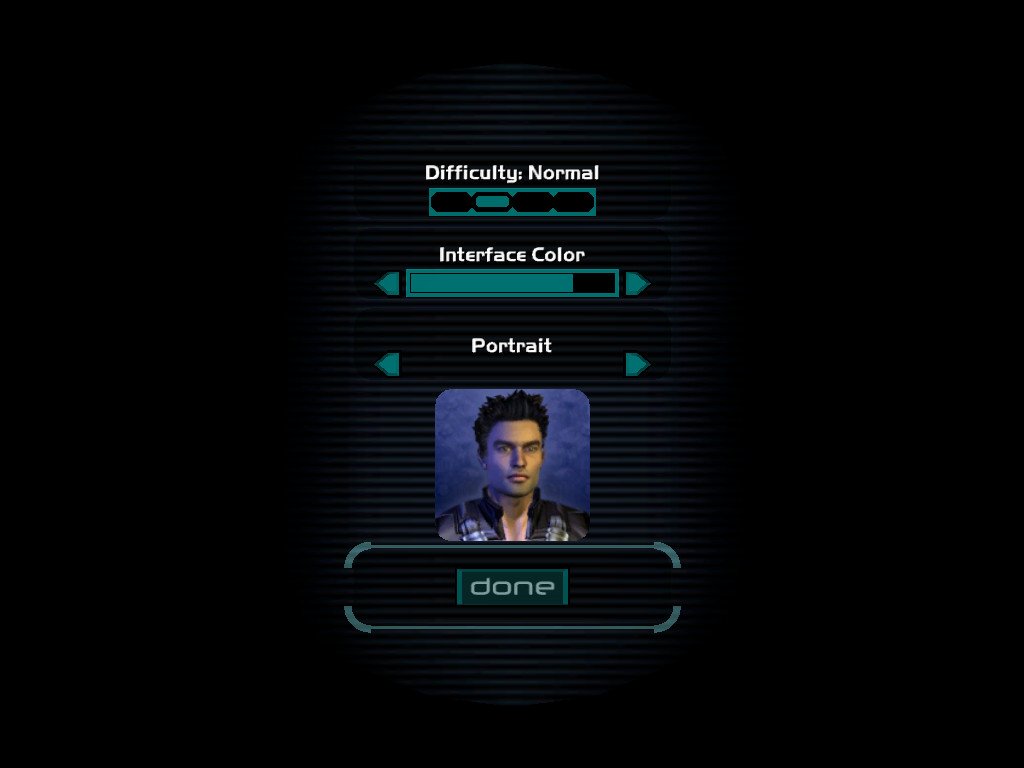
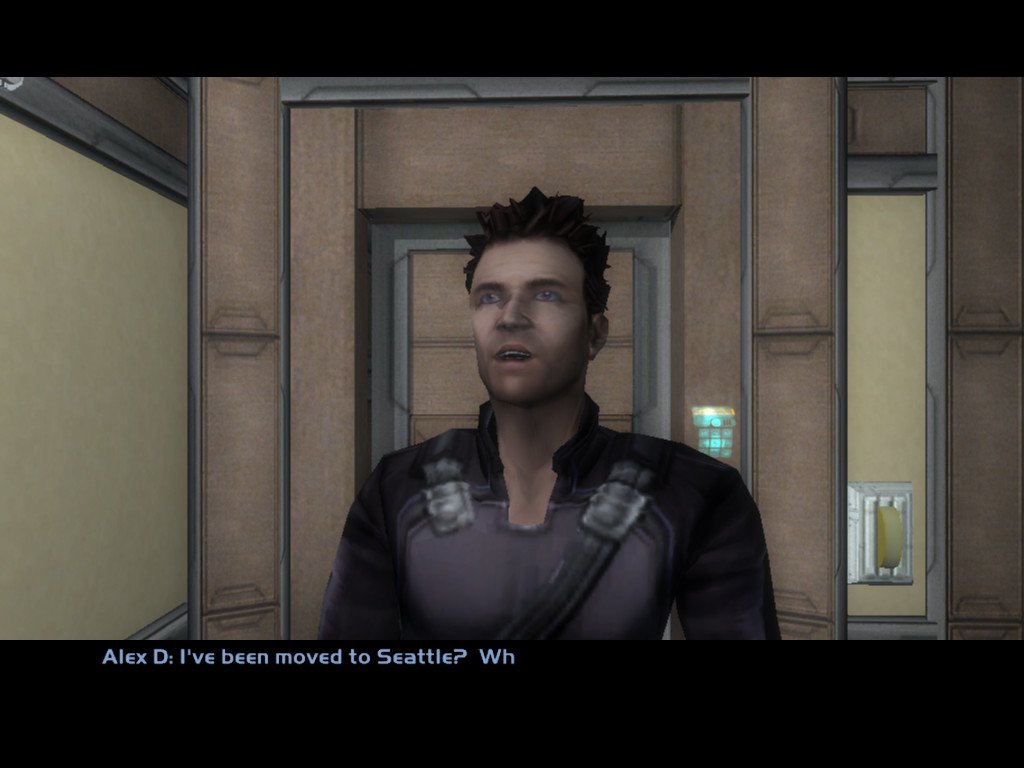
- Meet your dull sounding alter-ego.
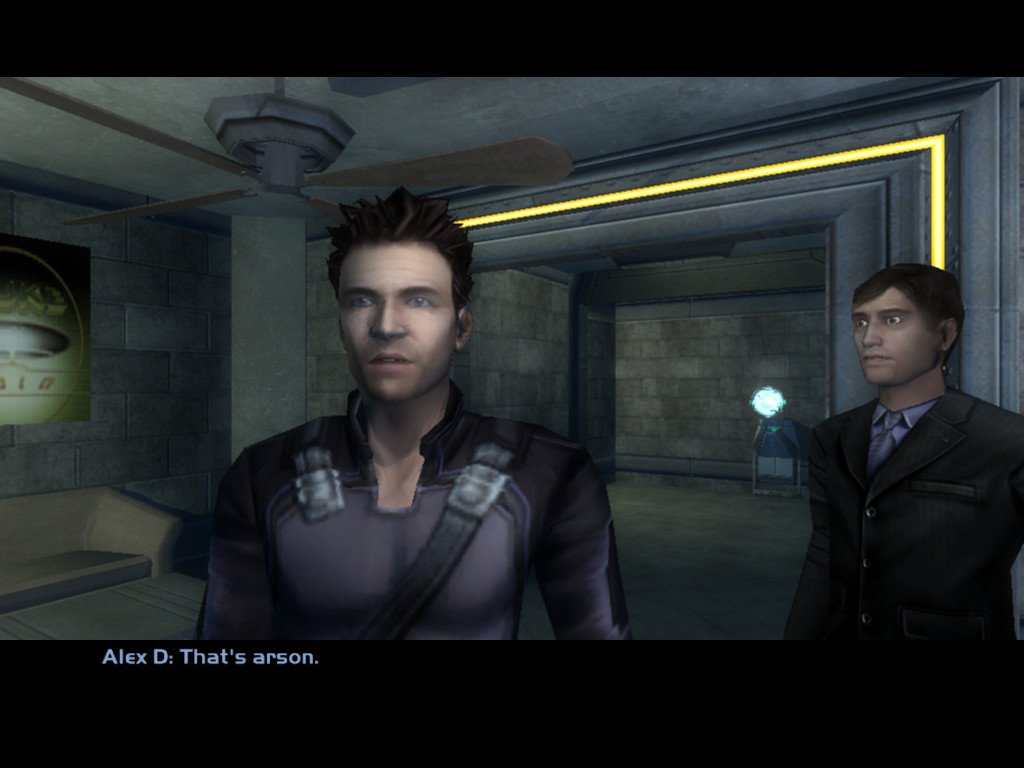
One Hell of a mixed bag
Character development migrates from a statistics-based development system to a “biomod†one, where you add specific component upgrades to your persona. Biomods in the same area are exclusive; for example, if you choose the cloaking eye biomod, you won’t be able to gain the hacking one without invalidating all of the levels of cloaking first. This is a good system in concept, since it asks the player to pick a specific play approach. However, the implementation also has a big problem because in order to allow players some degree of flexibility, there are too many biomod upgrades offered too conveniently. It’s not only too easy to hit the character development ceiling early in the game, but it’s also nearly impossible not to do so.
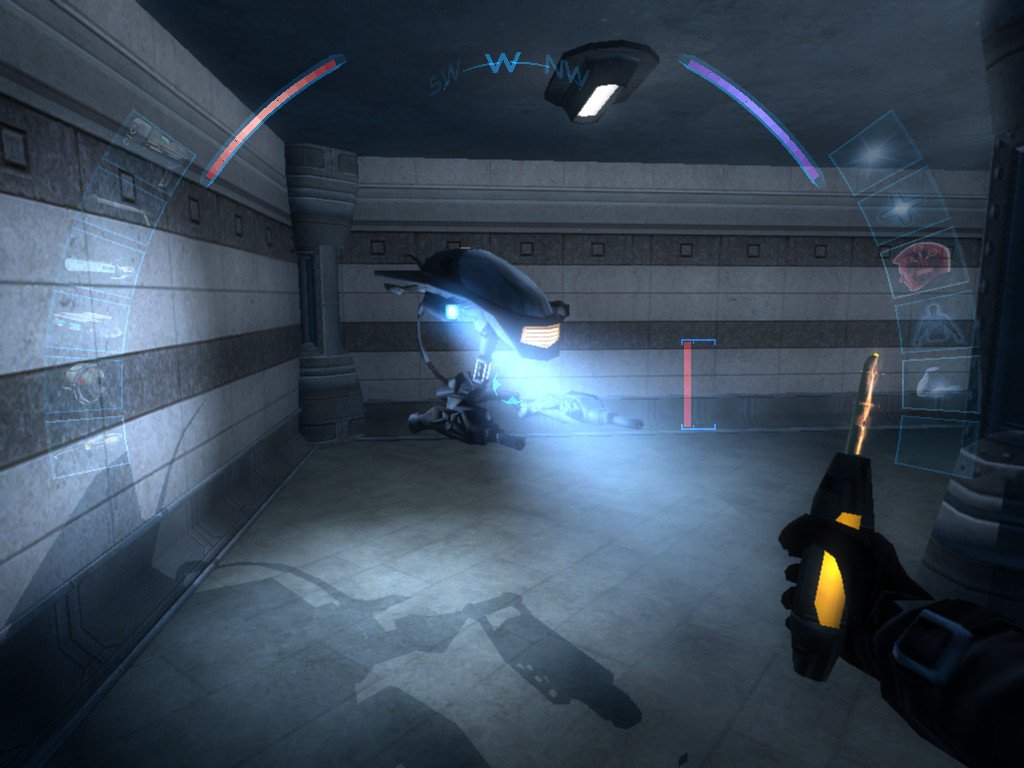
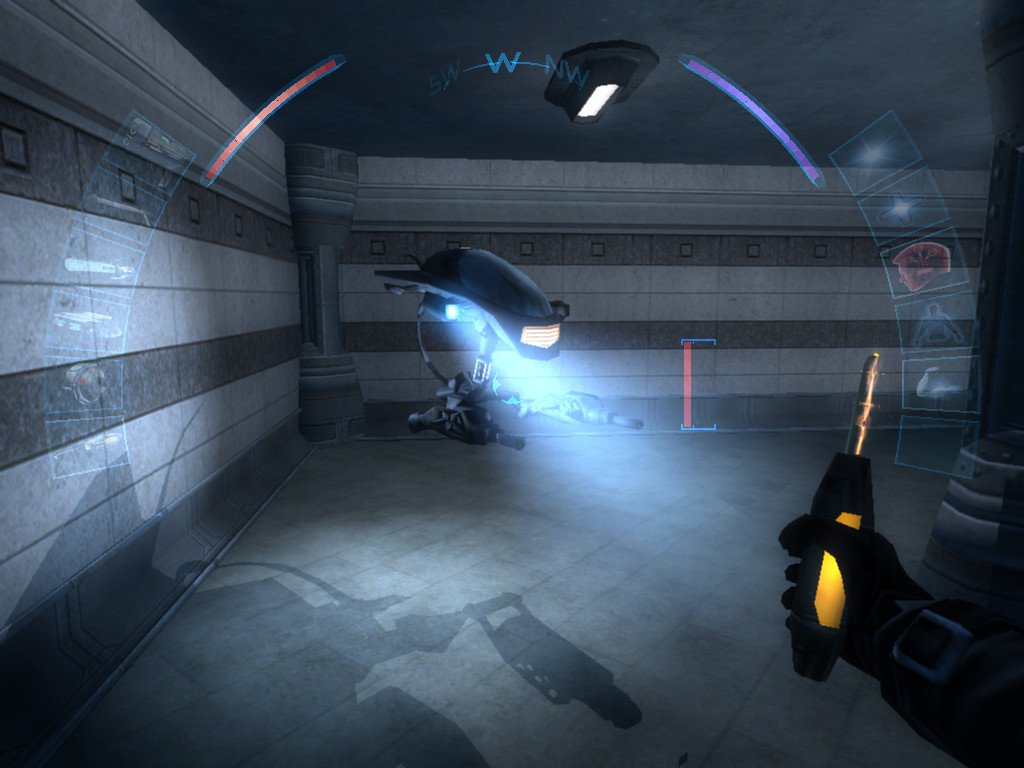
These bots keep the peace – don’t attack them.
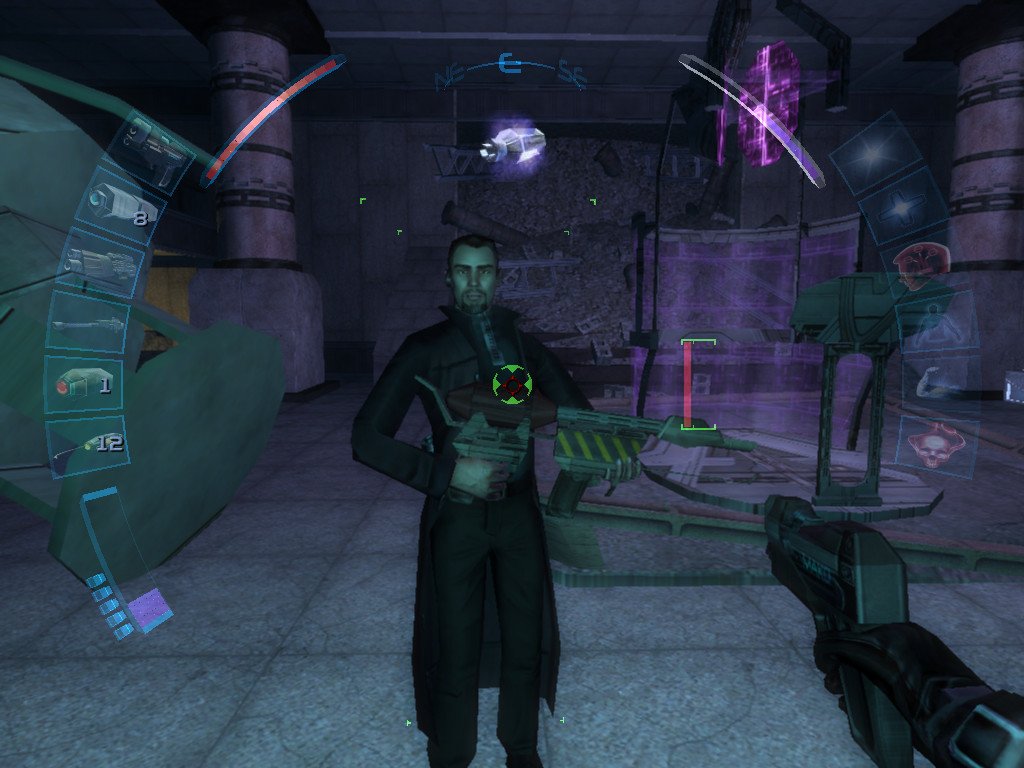
Now, for many fans, many of these mechanical flaws could be forgiven if the dense atmosphere of the original were here. And to some extent, it is. The main plot arc is a bit more predictable than that of the original Deus Ex, largely due to some recycled plot twists—although fans will certainly geek out when ex-protagonist JC Denton and his brother make the expected return. Disappointingly, the voice work isn’t as good. Many of the same-looking character models speak in amateurish, hokey accents, and new protagonist Alex D (both male and female versions) is just boring to listen to.
But even without the qualities of the previous title, Invisible War is still an entertaining game most of the time. It’s accessible, it’s not particularly cumbersome and it’s easy to pick up and play. But when matched up against the complexity and challenge of the original Deus Ex, it’s just not as good.
System Requirements: P IV 1GHz, 256 MB RAM, 32 MB Video, Win98SE
-
Buy Game:
store.steampowered.com
www.gog.com
www.amazon.com -
Download Demo
fileplanet.com -
Vintage Website
www.deusex2.com







after I launch the game it crashed at the loading screen help pls
Tried using compatibility modes? https://www.gog.com/forum/deus_ex_series/de_invisible_war_crashes_on_startup
There is actually even better solution. Try using unofficial community patch called “Visible Upgrade”:
http://www.ttlg.com/forums/showthread.php?t=147423
It not only fixes most performance and stability problems caused by newer hardware and OS (this game is infamous for that) but it also shortens those frequent load times, adds native support for widescreen resolutions and even includes higher resolution textures pack. ?
a great game and a worthy sequel